

The Association for Anthroposophic Curative Education and Social Therapy (ACEST) in our country has taken up the Herculean task of shaping a future aimed at bridging the huge gap of social isolation and creating a socially inclusive world for people in need of assistance.
Three decades ago, the socio-therapeutic-curative impulse came to India and its growth was mainly stimulated by three educational paths: one was the Camphill impulse, the second was the IPMT organized by the Medical Section at the Goetheanum and in recent years, the IRA Waldorf Education Foundation Course.
The impetus for the Camphill movement was initiated around 30 years ago by some friends in Bangalore in collaboration with members of Camphill Copake (USA) on the fertile soil of South India. Conceived as a day care center offering vocational training and new perspectives to people with developmental needs, the institution has gained momentum and is now a force to be reckoned with. The original aim was to create employment and gainful employment opportunities for people with assistance needs. From these modest beginnings, the desire to establish a residential facility in which a meaningful and purposeful life could be led, a life in which the residents were valued, manifested itself. In 1999, the Friends of Camphill India initiative was inaugurated.
The community in Bangalore initiated a three-year basic course in cooperation with members of the Camphill Organization Copake and other teachers who were active in the field of curative education and inclusive social development in Scotland, Ireland, the Netherlands and Germany. A large number of professionals and conventional educational specialists completed training on this new anthroposophical path. The 50 or so trainees went on to set up their own initiatives or worked in other institutions, integrating anthroposophical values into their work.
In South India, the work grew exponentially through the people who were trained in Friends of Camphill India. Additional reading courses and study groups were offered for trainees who sought a deeper understanding of anthroposophy through participation in the IPMT and IRA course modules. In recent years, courses in a regional language, Tamil, have been conducted by Avapanam and a group of trainers.
Indian spirituality and the anthroposophical understanding of the human being
The Indian people are no strangers to the concepts of reincarnation and karma. Regardless of where we come from, we have a deep understanding of humanity and spirituality and appreciate the gift of life. This understanding led to the rapid spread of ACEST as people recognized the similarities between traditional Indian philosophies and values and the views of Rudolf Steiner.
Just as Indian philosophy speaks of self-realization and understanding one’s true nature, anthroposophy aims to build a bridge between the spiritual and material worlds. Both traditions emphasize the integration of body, soul and spirit. India also has the ancient Gurukul school system, which provides a holistic education for children, and the path of ACEST can be followed in a similar way. The program offers children the opportunity to explore nature, become one with it, have spiritual experiences and have teachers who have a great influence on their development.
India is known throughout the world for its enormous agricultural wealth and Indian traditions, deeply rooted in the seasons and festivals, are highly valued all over the world. The curative education and inclusive social development movement has beautifully integrated the anthroposophical approach and adapted it to the needs of the country and regional locations in India.
Anthroposophical curative education and inclusive social development has not only helped in accepting the biographical challenges but has also led to a deeper understanding of personal destiny, individual self and one’s life choices. The concept opens up opportunities to work with different aspects of human existence, including nutrition, nature, the body and the senses. Another focus is on changing and adapting the environment rather than trying to change the child. Teachers are given tools to understand that working on the self is essential to creating a supportive environment for teaching and relationships with learners. As a result, initiatives in the field of special education and inclusive social development have been established across India. Care has been taken to ensure that the principles of curative education and inclusive social development in general and anthroposophy in particular are upheld. Although the effects of our work are not always immediately evident, they are always present and manifest themselves in subtle ways and in small steps. Every little drop makes an ocean!
Public perception
The results of our work are largely perceived and appreciated positively by the public. People are often impressed by various aspects of our work. These include, for example, the reverence for the child, the relationships with each other, the provision of meaningful employment for adults with assistance needs, the way the rooms are cared for and other factors. The public appreciates the methods we use, as they can see the results of our work immediately. Outsiders sometimes ask what measures are taken to achieve the peace of mind described above when working with people with assistance needs. Parents are our most important advocates and occasionally also our critics, as they take the time to understand the way we work. There is also an interest on the part of the health sector and state supervisory authorities in learning about our methods, as we work transparently. We warmly welcome them. The public can understand and empathize with the love in the relationships between teachers and children and in the relational partnership between professionals and adults with assistance needs, which creates a sense of well-being in the community.
Challenges
Working in India is a challenge in two main ways: on the one hand, it is important to create training opportunities and, on the other, to recruit workers. Working with people in need of assistance is not seen as a lucrative profession, which is why the sector needs to be upgraded at all levels. There is a need to increase satisfaction with pay, optimize opportunities to improve professional qualifications and enhance the value of all those involved in the field.
So far, only the basic course in English has been offered, which is not recognized by the Indian government. In addition, the certificates resulting from this course are of little value when looking for work. Due to the geographical and linguistic size of the country, the creation of standardized vocational training is a particular challenge.
As in other countries around the world, our organizations are also faced with staffing problems. For the reasons outlined above, we believe it is necessary to offer training in local languages as well.
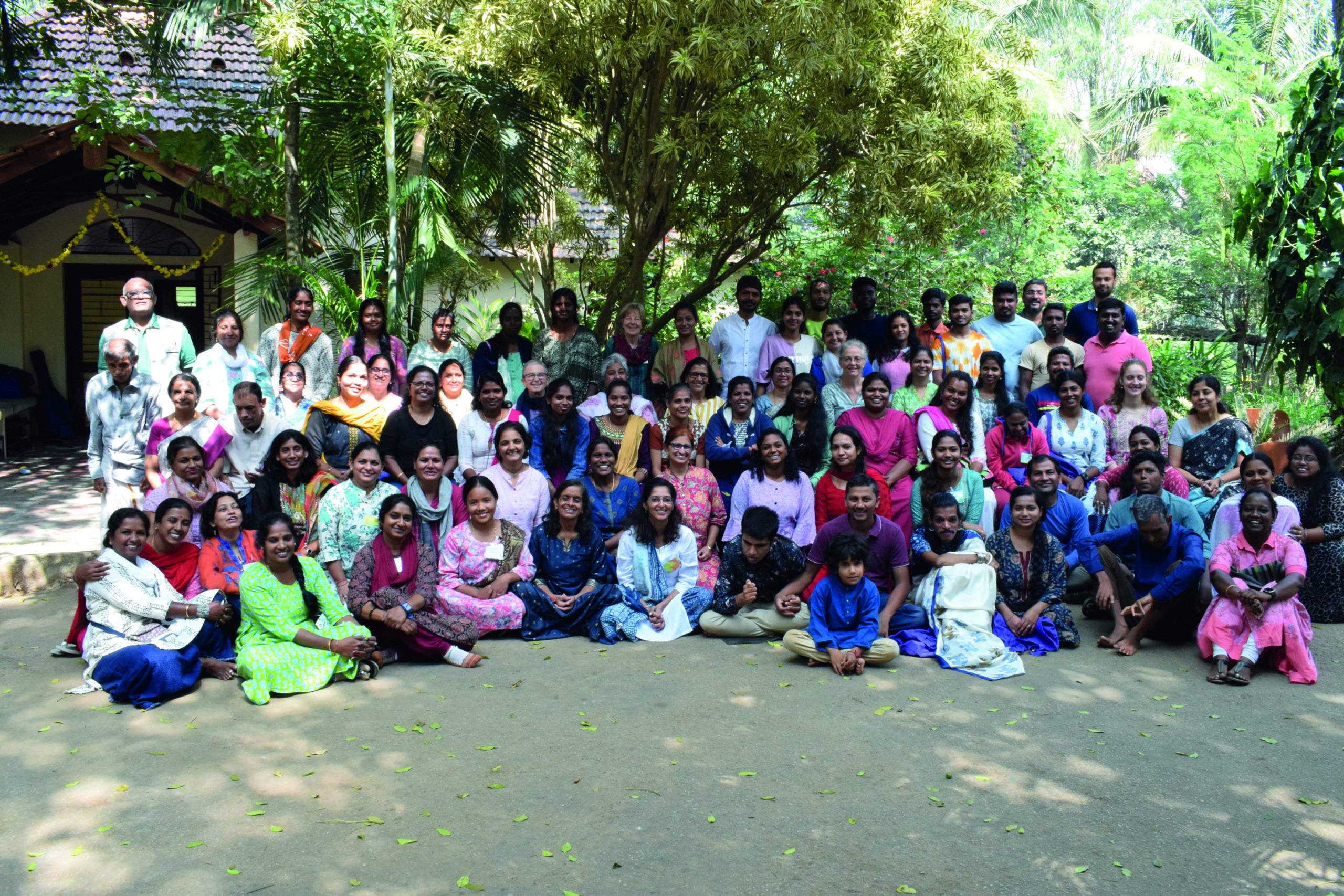
The Indian Forum for Inclusive Social Development (Avapanam), which was established in 2018, has already successfully implemented a number of programs that meet the aforementioned requirements. Over the past five years, we have held annual four-day retreats that offer a balance of lectures, workshops and opportunities for exchange and networking for all participants.
Avapanam has just started a journey, and the top priority is to create training opportunities at regional level to be extended to national level.
Photo: Avapanam
