
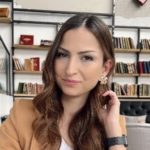
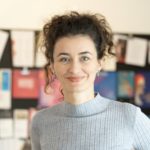
F. H. : Sandra, please, tell us a bit about the Step Together initiative. What is the motivation behind it?
S. R. : Step Together, established in 1974, is a non-political and non-profit NGO. It is a dedicated community that supports children and adults with special needs while also serving the wider community through awareness, training, and inclusive initiatives. Our mission is to provide high-quality educational and therapeutic services through a diverse and continually evolving range of programs. For over 30 years, we have worked to create an environment where every individual can thrive, regardless of circumstances.
F. H. : Let´s go back a bit into the history of your organization. How did it begin, and what do you provide exactly?
S. R. : Step Together was founded in 1974 as a kindergarten by pediatrician Dr. Waltraut Merhej, the mother of our current Executive Director, Dr. Rim Mouawad. Over the years, it has grown to become today a holistic center offering a wide variety of services and programs for children and adults with special needs. We have an early intervention program, a school program, a vocational program, and a residential community program. We employ the Waldorf and Rudolf Steiner teaching methods, which promote the uniqueness of every individual. In addition to educational services, we offer both traditional and holistic therapies.
Over the years, Step Together had to change locations several times until this beautiful land for our organization was offered by a parent. With the help of architects from Germany, this healing building in this beautiful landscape was realized. Step Together is located in a natural setting surrounded by trees and a river. The building itself is designed organically, its shape harmonizing with the surrounding mountains. This open, green space offers a sense of healing and peace for all who work, learn, and live here. Step Together is a place of hope that has protected us during times of crisis. For example, during the pandemic and even during periods of conflict, Step Together was considered a safe zone where parents, staff, and children continued to come, motivated to be here despite the circumstances.
Step Together is recognized and accredited as a training center in Dornach, Switzerland. Professional development is something we never stop investing in. For us, this ongoing training is a powerful tool to sustain resilience amid everything that is happening around us.
F. H. : Your website opens directly with a quote from Rudolf Steiner. How did it happen that the founder of Step Together tapped into anthroposophy?
S. R. : Dr. Wali—actually her name is Waltraud—is German and was truly the driving force and connection to anthroposophy. She was a pediatrician. She founded the kindergarten Le Petit Prince [The Little Prince] and empowered women by enabling them to work while having their children with them. When the war began, she insisted on staying in Lebanon, where she supported people in refugee camps and shelters. It was not easy to introduce anthroposophy in a country with so many different religions and belief systems. But today, we see how important anthroposophy has been for us.
F. H. : Thank you for introducing us to Step Together! I invited you to this interview because of this very specific time and crisis we are living in which includes that you and your community have to confront extreme challenges in the face of war, attacks and destruction. In Lebanon, you already went through civil wars and conflicts, the latest being the reignited war with Israel during the last two years. Your community is in the suburbs of Beirut, which suffered from heavy Israeli bombardments, too. Can you describe how you have been operating recently?
S. R. : As you said, Lebanon has faced many wars in the last decades. And when I try to recall the most recent war, I still do not know how we managed to operate under such conditions. However, it has always been very important for us to keep the community doors open because everyone needed support during times of crisis. Many mornings, the students and staff would arrive after sleepless nights due to the constant bombing, and we all know the importance of sleep for the regeneration of life forces. Despite that, we felt the need to engage, to stay grounded, present, and find strength. It was optional for the staff to rest at home if they needed to, or to come to work. Yet, 90 percent of the staff chose to come because they needed this space too, and we provided them with opportunities to talk about what was happening and safe mediums to express themselves through art.
During times of crisis, especially during war, my role, the role of the leadership team, and of the whole Step Together community extended. We had to be present for our own community, especially for the adults: teachers, and parents who are part of our students’ lives, because these are the ones who are supporting the children, and they needed to be supported themselves. For our staff, we created emotional support sessions through which we tried to build on their inner strengths. We held reflection circles. We included many art-based sessions in our daily work. We shifted our priorities. We changed our plans and agendas to support the teachers and parents because most of them were anxious and overwhelmed, unsure how they could proceed with their own lives, and how they could support their children during this situation when they themselves needed support. We kept close contact, and we tried to offer reassurance and simple strategies to maintain a rhythm at school and at home, even though we knew many of our families had lost their homes. We tried to strengthen the solidarity and sense of community that we have been building over the last 30 years, reminding them and ourselves that we are not alone in this. We also sheltered some of the families of our staff members who lived in very critical streets and areas. Some lost their homes in the bombings, and they were sheltered here. We then started to reach out to the wider community surrounding us. We sheltered a family we did not know before, who could not find shelter in the local public school. Soon, through talking and cooking together, this family became part of our community too. We also reached out to the wider community and offered psychosocial support to the sheltered families inside the public schools. We had three public schools nearby, so we went there to support the children. Our staff also joined hands and cooked around 500 meals daily for displaced families. This encouraged us to keep going with our engagement. These acts were simple, but they were deeply humane.
F. H. : How did the situation affect your students in the center?
S. R. : It affected them very much. Often, people think that children with special needs are not aware of such situations. However, they can sense or feel that something is wrong, even if they cannot express it in words. Many of our students are non-speaking and are unable to verbalize their emotions or voice their questions. Yet, they could sense the anxiety of those around them, especially their families, and they were exposed to the media and the energy in those media, where images of destruction and bombing prevailed. The routines of the children were interrupted, and we know how important routines are for the development of children with special needs. Many of them had to be displaced and moved during this time. Most of those who had their homes in the south of Lebanon lost them. Many who came from Beirut also lost their houses, and in any case, it was not safe to stay there. And speaking of sensory and auditory input, there was the sound of missiles in the sky all day long. For us adults, it was already very disturbing, but we got used to it. For the children who are on the autism spectrum and are already highly perceptive, those sounds and visuals were extremely challenging. It could lead to undesirable behaviors because they needed to communicate through actions what they could not communicate through words. We could see that they were unable to process or express what they had been through. We tried to integrate a lot of arts, rhythmical exercises, healing stories, songs, and music, just to replace the disturbing input with something beautiful.
F. H. : Can you describe the effects of the terror and war that you see in the individuals with special needs on the physical, emotional, or mental level? And for the methods you introduced to counterbalance these effects, were you able to observe which methods worked the most? Or did you have to adapt your methods?
S. R. : It is clear that children and adults who go through such a deep crisis will be deeply affected by it. Physically, we could see that after sleepless nights, students were exhausted and needed to be with us simply to rest. As I said, most of our students cannot communicate what affects them, but you see the consequences of these environments often in a relapse in their behaviors for example, through self-wetting as a sign of fear and trauma. Many students who had shown development in their speech and communication suddenly regressed, and their speech worsened. We could not really teach much during the worst periods of this war, but in activities that required focus and attention, we saw a decrease in these capacities, too. We also witnessed a lot of aches and body pains among our students.
We adults felt the same way, aching and unsure of how long this war would go on. The Israeli army used to announce where they were going to bomb, and this might, to a certain extent, feel like a warning. But it is psychologically and emotionally damaging to receive these visual signs, trying to zoom into the map, thinking whether you know anyone whom you should contact immediately to warn them, and to offer your home as a shelter. This stress was overwhelming for us.
At first, we tried to close our center on certain days, especially after rough nights. But when we realized that this war was not going to end soon, and we saw how our students and staff were regressing, we chose to keep our doors open. We felt that there was nowhere truly safe for us, not even in the comfort of our homes. At least we could try to reintroduce the rhythm of our work into our lives and remain productive and useful in our daily activities.
That decision made a real difference. I remember the first day we reopened, I felt less anxious because I continued doing what I had done before this disruption to my life. We saw the effect of this decision on our staff. We introduced the methods I mentioned to our students, and then to the families of our students, until we began extending our support to the nearby and wider community. We were recognized by the government as an NGO providing direct support on the ground, alongside other NGOs helping on different levels. We had monthly meetings and virtual calls together, and we could see how our aid through food and psychosocial support and the aid of the other organizations were truly meaningful. It motivated us to keep going when we saw our work grow beyond our own community into the larger community, making a difference.
F. H. : Did you also see the need to introduce new practices in your work?
S. R. : Yes. As I told you, we went to displaced people who were sheltered in public school buildings. To describe it well: these were not people who were poor before, but people who had decent homes and led stable lives. And overnight, they lost everything. Some lost their jobs, cars, and homes. They woke up one day without anything, and for them, asking for or needing help was not a common position to be in. Therefore, it was very important how we approached those families. We had to be very cautious because all of them were, of course, struggling emotionally.
We wanted to support the children, so we sent different teams to the schools to work with different age groups. That was when the adults approached us, too, because they saw that they needed this kind of support as well. We then had to adapt to this new, unforeseen need and find the right approach for adults. It was important to keep the age groups separate because of the different language and wording necessary to address the needs of each group adequately.
After intensive work with them, we could see changes in the children’s behavior. We drew and painted a lot together, and you could see their progress through the images. Their movement and their relationships with each other also improved. Some of them had been violent with each other, and we could see real progress. We reflected a lot on the children’s work because we wanted to learn from their resilience as well. Fortunately, the community also supported these sheltered families, and over time, different people provided items such as a washing machine or an oven, so they could cook on their own and not feel so dependent on us delivering their meals. They could feel occupied and useful. Receiving meals was important, but being able to cook their own meal was even more important for them.
F. H. : You already described the situation your staff faced, and I wonder, how is it now for them, the teachers, caretakers, and therapists that work with you? How are they dealing with their experiences today? How could you and the leadership team take care of yourself?
S. R. : In our leadership team, we have worked a lot on the six basic exercises that Rudolf Steiner offered. For us during war, those exercises were essential especially the exercise on positivity. Speaking about war, destruction, the loss of lives, homes, properties, and the dysfunction of the whole country, it is very difficult to see the positive. But with proper practice, you can still see a chance for renewal, for transformation, and the positivity behind it. This collective community work has brought us together. The harsh situation brought us together. People who would have never met before joined hands and collaborated, and that was very meaningful to all of us.
This is of course not to ignore the suffering; there is a lot of suffering, and for some people it is worse than for others, but it is about choosing to work with it consciously. And you work with it by being present and compassionate. You then learn that, in the end, you have to look at the human being as a spiritual being, and nothing will destroy this spiritual entity. No war or other visible thing will be able to damage this spiritual being. When we look at each other with care and compassion, through this lens, then we will at least have some hope that better days are coming. The Lebanese people are naturally positive, and whenever something bad happens, we are told that we are ‹the resilient ones›. But it has become too much; we no longer want to hear the word ‹resilience›. Still, we hold on to the hope of a better future for everyone. What your report shows to me is that humans are capable of inclusion in a much greater sense, meaning that we can realize coming together, weaving communities and a society with consciousness and care. I would not wish for anyone to go through such horrors, like you did, but I think what you describe as an approach of dealing with it carries the seeds of our humanity.
F. H. : Two words came to my mind while I listened to you, and I would like to ask you about them as a last question. Considering the situation and all the diverse people you work for, ‹security› and ‹vulnerability› come to my mind. In such a situation, obviously, security is erased, and it brings up many insecurities on different levels. And there is no denying that a community like Step Together is especially vulnerable because your students sense and communicate and move differently, and possibly they are not able to react in a pre-ordered way in an emergency. Do you see a way for the healing of the security and the vulnerability in this context when the war ends, hopefully?
S. R. : Working in this field, we very often decide for the person we are working with. We say: «This will work for that person,» etc. We always assume that they are unable to decide for themselves and that they are always dependent. And this very often comes from good intentions… we are trying to assist, to support, or to do things for them. But in the end, they are just like us, a part of our society. People with special needs make up at least ten percent of society, so they must be included in everything, even during a crisis.
During this war, we tried to explain to those who could understand a little bit about what was going on. It would be harmful not to talk about it with them because we cannot deceive them. They hear and feel everything around them. For us, it was therefore important to explain a bit of what was happening, based on their level of understanding. Our director, Dr. Rim, made sure to pass by each class, ask students how they felt, and talk with them about it, to see their understanding and include them in the discussions. They are part of this region, and they have a right to know.
At the same time, it was very important for us to make them feel safe and reassure them that they are still safe here. They can still paint here, they can still see their friends here, and they can still follow their daily schedule. Even for the parents, the school was a safe space, and we made sure that the parents would stay near the school, just in case we had to evacuate. So, here in our community, the students were more shielded. And we had a psychotherapist with us who took care of individuals and of us as a group of staff, so that we, too, were supported.
It was not easy. I honestly do not know how we managed all that, but maybe we also had no other option. And when you have no option, you find the strength.
(Note: This interview was recorded on the July 11 2025.)
Link: www.steptogetherlb.org