
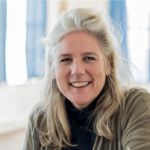
«The significance of the arts is that they increase volition (1). A lack of volition is associated with mental illness…» Fenya Sharkey
For the last twelve years, Compass Arts has been consciously cultivating an intergenerational community with adults living with severe mental illness, neurodiversity, and histories of unspoken trauma. Through expressive and conceptual arts, Compass has developed a uniquely therapeutic environment. It is more than a wellbeing program. It is a contemporary expression of what Rudolf Steiner described as a «free cultural life», where creativity and community make possible the gradual renewal of selfhood (Steiner, 1993).
A Free International University Emerges
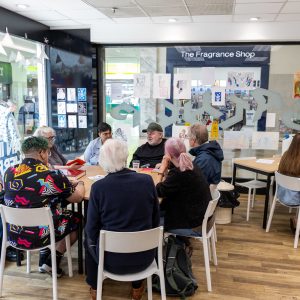
In 2023, a small number of the Compass community founded a Free International University and meet regularly on Monday and Wednesday mornings. This initiative was inspired by Joseph Beuys’ social-sculptural experiments and resonates with an early UK pioneer of anthroposophy, Daniel Dunlop, and his biographical impulse toward a spiritually awake civic culture, in which moral imagination and inner responsibility shape social life (Beuys and Harlan, 1993; Meyer, 1987).
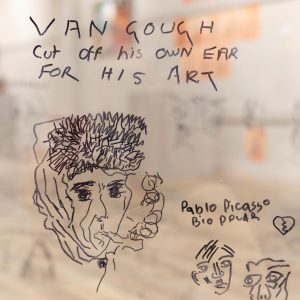
Within this orientation, members of the Compass FIU, began to re-identify not as patients but as artists whose inner life, imagination, and biography could become material for shared inquiry.
Compass received a small grant from East Sussex County Council’s Making It Happen program to demonstrate that it is a research-ready community. Stepping into this role, the FIU asked a central question shaped by what emerged in dialogue:
«What cultural norms shape the experience of severe mental illness, and how might we transform the costly consequences of those norms through art and reflection?»
This was not conceived as a research project in the traditional academic sense. Rather, it developed organically as an artistic response to what the community was already perceiving, expressing, and living.
A Dialogue-Based Approach to Understanding
The inquiry unfolded through Bohmian Dialogue, a collective and non-hierarchical method that mirrors Goethean Conversation. The aim was not to reach agreement, but to awaken to each other, deepen shared understanding, and reveal the spiritual organism of the group and its connection to the wider cultural phenomenon of unspoken trauma (Bohm, 1996).
Over six months, ten FIU members met twice weekly to explore their biographies, the social care they have received and the othering that they live with as adults who have symptoms of complex trauma. These experiences are translated into artistic responses and gestures. Art thus becomes both a method and a form of medicine.
A central insight emerged: many participants lived not only with diagnostic categories but with the aftereffects of cumulative relational trauma. This often originated in childhood or formative relationships where dependency, coercion, and emotional erasure became fused. Contemporary trauma research similarly describes how prolonged relational trauma disrupts agency, embodiment, and self-regulation (van der Kolk, 2014).
To describe this experience, the FIU adopted the term ‹nonnormative›. This naming reflects trauma-induced disabilities that are not simply clinical conditions but expressions of deep soul injury and suppressed selfhood.
One member described the nonnormative state as an «elective erasure of personhood» used as a survival strategy. This resonates with Steiner’s view of how early life wounds can fragment the I-organisation and obscure moral agency (Steiner, 1994).
Recuperation, Not Access
Rather than relying on the language of access familiar in equality policy, Compass emphasizes recuperation: the gradual, peer-led rebuilding of selfhood and volitional capacity. In this approach, genuine healing begins not with entitlements or adjustments, but with the reawakening of the I that illness may obscure but never fully extinguishes. This understanding aligns with Steiner’s conception of freedom as an inner ethical activity rather than an externally granted condition (Steiner, 1994).
Love Letters to the System
One of the most striking artistic outcomes of the FIU’s process was Love Letters to the System. These letters, addressed to professionals within health structures, hold both gratitude and grief. They come from a longing to be met in full humanity.
One FIU member wrote: «You have become the Wizard of Oz to my Dorothy… elusive, not really there, hiding behind a façade. But don’t you realize, in your humanity is your greatness?»
This is not a complaint. It is an invitation to close the gap between patient and practitioner. When the FIU received replies from health workers, they discovered that the staff were often as distressed by the system as the patients themselves. What emerged was a shared recognition that contemporary care structures, designed to be risk-averse and legally safe, unintentionally strip volition from both sides. Staff cannot exercise their natural human judgement and response, and patients depend on that very human response to receive meaningful care. The Love Letters reveal this paradox: a system of health care that bruises everyone within it, and a longing on both sides for a way of working that allows authentic will and empathy to take part in the encounter. This paradox reflects Beuys’ insistence that art must operate as a healing force within damaged social systems, restoring human judgement, dignity, and responsibility where bureaucratic forms fall short (Beuys and Harlan, 1993).
A Spiritual Ecology of Trauma and Renewal
Compass’s approach pays attention to what might be called a spiritual ecology of trauma. Instead of pathologizing individuals or separating them from their biography, the FIU recognizes the collective dimension of wounds, especially those formed in intimate or familial betrayal.
Participants described how trauma can disrupt the capacity to receive love, trigger profound hypervigilance, and collapse the inner sense of rightness and direction. They also observed that existing systems, although well intentioned, often retraumatize by applying normative expectations to nonnormative experience. Cultural critiques of modernity similarly argue that art must reclaim an ethical and relational role in order to counter fragmentation and alienation (Gablik, 1991).
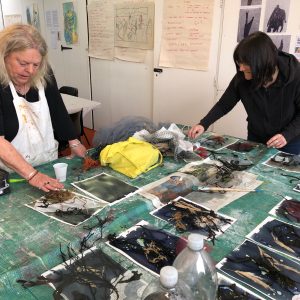
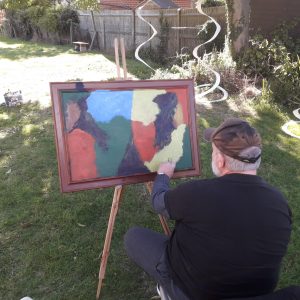
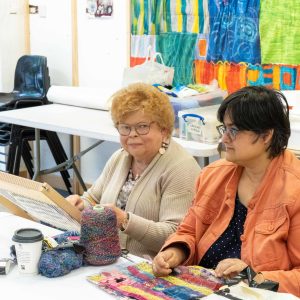
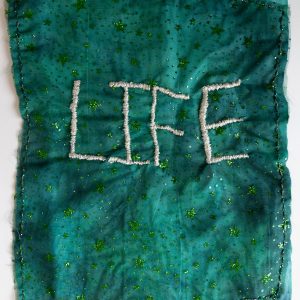
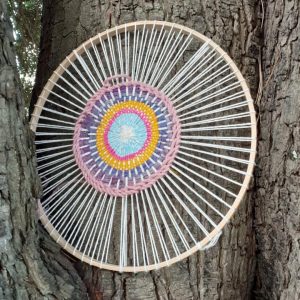
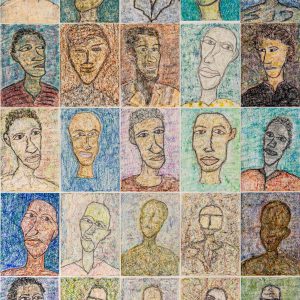
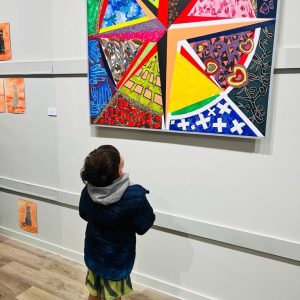
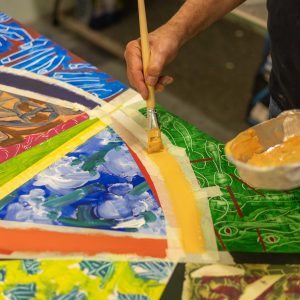
Steiner wrote that illness can arise when the soul’s developmental needs are unmet, and that healing involves the restoration of meaningful movement within biography (Steiner, 1993). At Compass, this movement takes place through painting, textile work, writing, photography, and sound, not as therapy sessions but as the ground for truthtelling and becoming.
The studios are not ‹safe spaces› because they are controlled. They are safe because they are alive with artistic intention, warmth, and a shared commitment to presence.
Conclusion: From Inquiry to Inner Movement
The work of the FIU is relevant to practitioners and policymakers, but it also speaks to a deeper cultural need: the renewal of spaces where soul life can be seen, heard, and honored.
The nonnormative are not an anomaly. They are a mirror, revealing how our social forms often suppress complexity, vulnerability, and the slow labor of becoming human. As Dunlop’s biography demonstrates, cultural renewal depends not on systems alone but on individuals willing to carry moral responsibility into civic life (Meyer, 1987). The FIU’s work affirms that where art enters, volition rekindles, and where volition returns, a sense of dignity, personhood, and future begins to grow again.
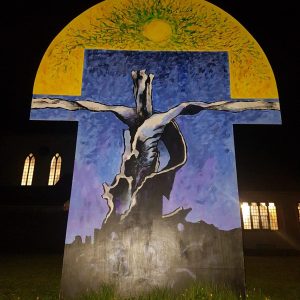
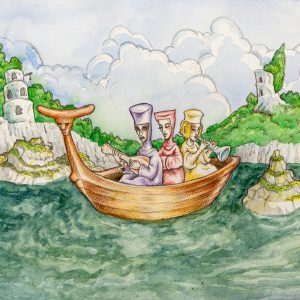
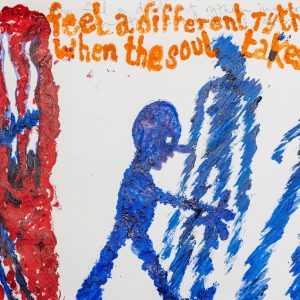
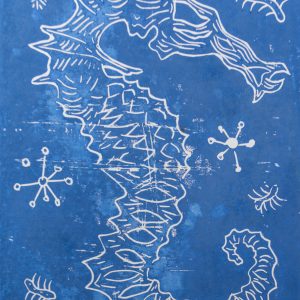
Photos: Compass Arts / FIU
Footnotes:
(1) Volition and agency are interchangeable and refer here to the inner capacity for self-directed will, intention and meaningful choice, unders- tood as both a psychological and spiritual faculty.
Literature:
Beuys, Joseph (1993). What Is Art? [Was ist Kunst?] Edited by Harlan, Volker. Forest Row: Clairview Books.
Bohm, David (1996). On Dialogue. [Über Dialog] London: Routledge.
Gablik, S. (1991). The Reenchantment of Art. [Die Wiederverzauberung der Kunst] London: Thames & Hudson.
Meyer, Thomas (1987). D.N. Dunlop: A Man of Our Time. [D .N . Dunlop: Ein Mann unserer Zeit] Forest Row: Temple Lodge Publishing.
Steiner, Rudolf (1994). The Philosophy of Freedom. [Die Philosophie der Freiheit] Forest Row: Rudolf Steiner Press.
Steiner, Rudolf (1993). Towards Social Renewal: Rethinking the Basis of Society [Soziale Erneuerung: Die Grundlage der Gesellschaft neu denken] Forest Row: Rudolf Steiner Press.
van der Kolk, B.A. (2014). The Body Keeps the Score: Brain, Mind, and Body in the Healing of Trauma. [Das Trauma in dir] London: Penguin.