
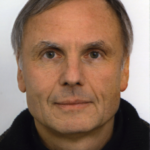
Author: Regine Bruhn
Publisher: Freies Geistesleben (2025)
[English forthcoming as The Life of Karl König: Founder of the Camphill Movement. Edinburgh: Floris Books, 2026. UK release September 24, US release October 20.]
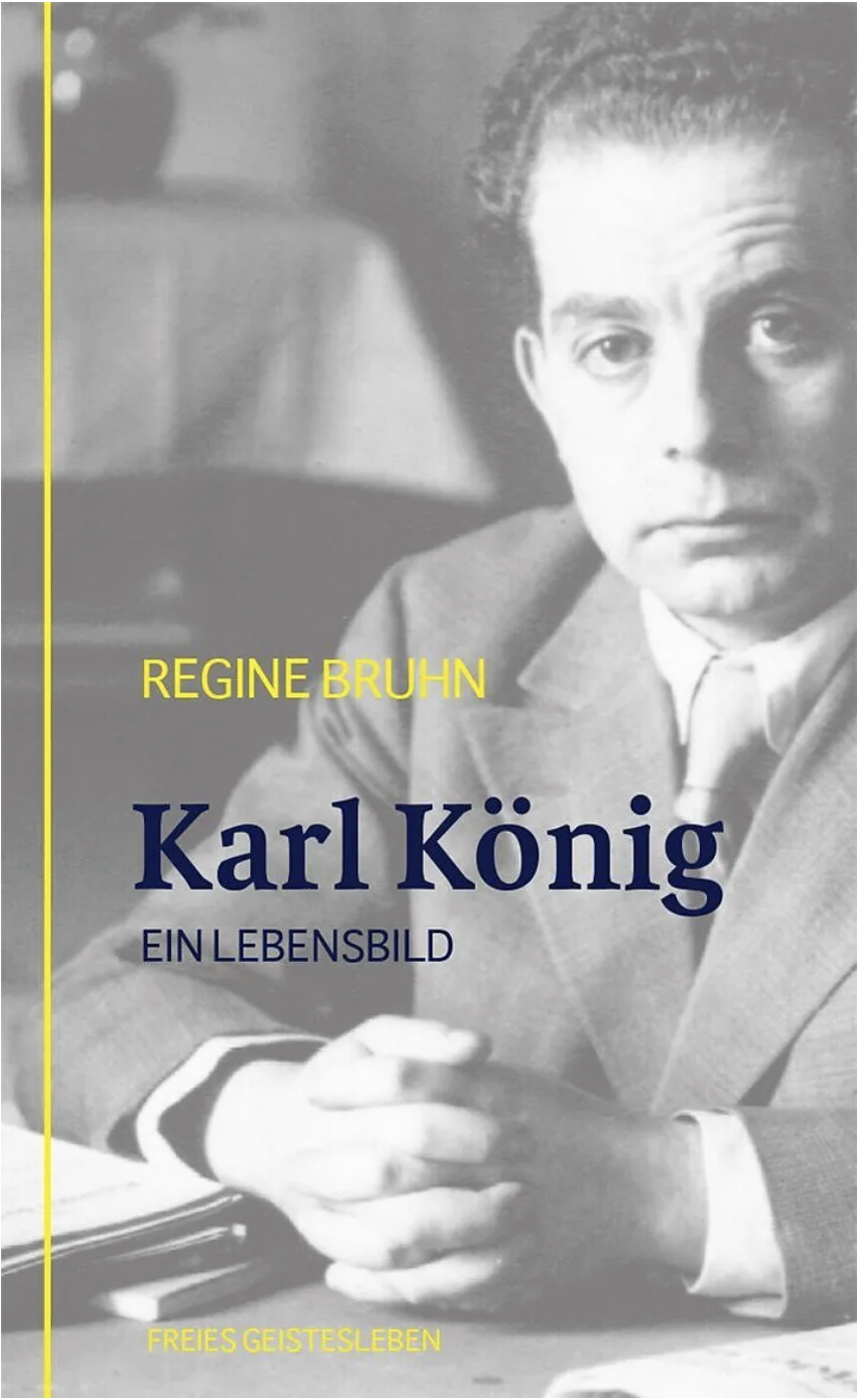
In recent years, the Karl König Institute has made significant contributions to preserving the life's work of Dr. Karl König, the Viennese physician, supportive education teacher, and founder of the worldwide Camphill Movement not least through the publication of a comprehensive edition of his collected works. One of the institute's executive board members, Regine Bruhn, who is thoroughly familiar with the extensive archival material, has now published a biography that incorporates new points of view, is written in a fluid style, and ignites the reader's interest. Regine Bruhn's primary intention is to introduce Karl König to readers not yet familiar with him. As stated on the back cover: «In this biography,» his eventful life «is finally made accessible to a broad audience.»
In doing so, the author gives ample voice to König himself, those close to him, and the testimonies of his contemporaries. Essential milestones in his life, many of his companions, and decisive influences are highlighted. The publication is supplemented by photographs of people and places that played an important role in his life. Karl König is portrayed as the persecuted Jew, the sought-after physician and scientist, the public speaker, and the founder of a community.
And yet, his grand ideas, insights, and visions are only mentioned in passing, implicitly, or very briefly. In particular, his pioneering approaches to supportive education and social therapy are scarcely mentioned; his genius and his great achievement remain in the shadows: Karl König as innovator of inclusion and empowerment for adults who require assistance. König emphasized the spiritual in every human being, especially in people with disabilities. He highlighted every person's fundamental capacity and need—for education, regardless of their intellectual abilities. He stressed the importance of essential encounters between people, the attitude and posture of supportive education, and the personality of the support provider for the effectiveness of the assisting work. In social therapy, he relied on the effectivity of the social context and sought to realize social threefolding in the Camphill Movement. And, he was also an advocate of social agriculture. All of this receives little attention in this biography. But people today will still find it rather astonishing just how far ahead of his time Karl König was in the field of supportive education.
In Regine Bruhn's Life of Karl König, significant parts of his life's work only begin to be revealed to the reader. It is precisely the ‹general public› (which may not yet be so well-informed) that may thus become curious while reading and want to learn more. To do so, though, they will have to turn once again to Hans Müller-Wiedemann's standard work. (1)
Perhaps the readers who will benefit most are those who have long been interested in Karl König, Camphill, and anthroposophy. They will discover many new and interesting details in this highly recommended book.
Translation from German: Joshua Kelberman
Note:
(1) Müller-Wiedemann, H. (1992). Karl König: Eine mitteleuropäische Biographie im 20. Jahrhundert [A central european biography in the 20th century] Stuttgart: Freies Geistesleben.