

Ubuntu is a way of understanding the human being as deeply relational, woven into the fabric of community, the cosmos, and the earth. The philosophy of Ubuntu is shared among Bantu cultures in Sub-Saharan Africa, providing a shared inner orientation across this large and diverse cultural space, a ‹paradigm›, a body of interconnected ideas that make visible an otherwise hidden aspect of the human experience.
Though Ubuntu has entered global consciousness, the popular motifs drawn from it barely scratch the surface. On the African continent, Ubuntu is increasingly being integrated into professional disciplines, such as social work, education, regenerative agriculture, and community development, to create an African paradigm for social, ecological, and spiritual renewal in the 21st Century (on social work, see Mugumbate 2020; Mugumbate & Nyanguru, 2013; Mugumbate et al. 2023).
Anthroposophy, originating – as does Ubuntu – in initiation consciousness, attempts to re-integrate the dimensions of what it means to be human that have been lost to a Western-dominated, materialistic global culture, where emancipatory developments are accompanied by the destructive shadows of an extractive and exploitative relationship to the human being and the earth. From the perspective of African (and other) wisdom traditions, Anthroposophy can be seen as a search for a renewed Ubuntu for a globalized world, seeking to develop ways of healing the wounds of late modern society. The wisdom traditions of Ubuntu and Anthroposophy thus meet as kindred spirits in the healing practice of social work, education, regenerative agriculture, and inclusive community-building.
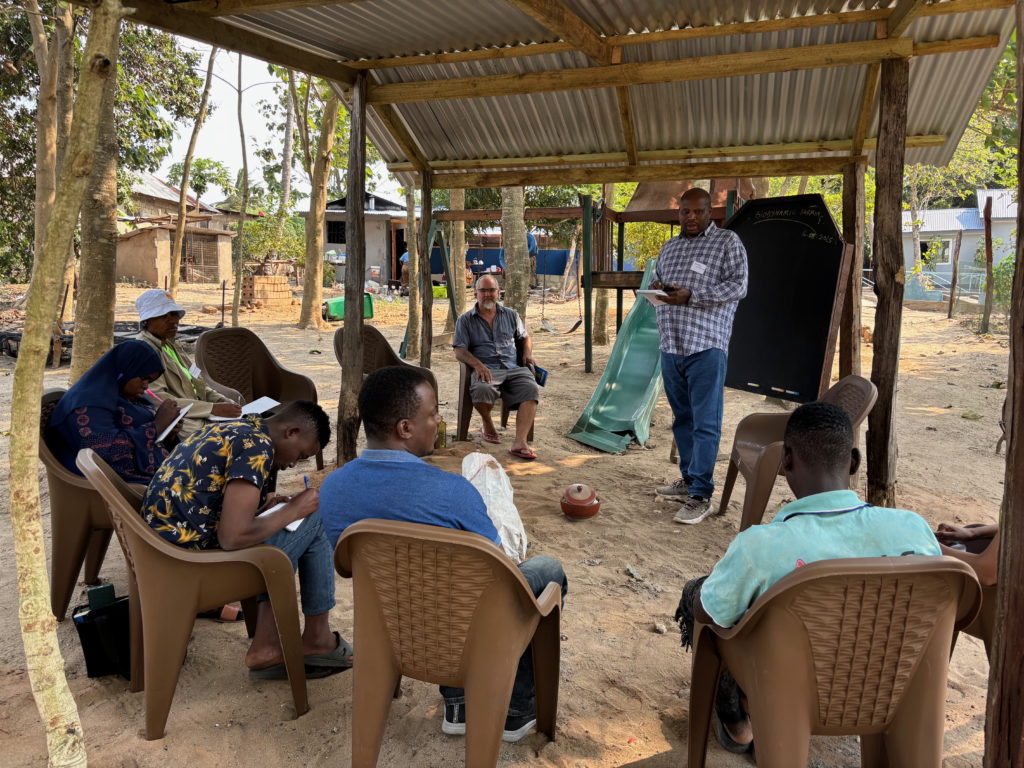
Camphill Academy Afrika intends to develop an interdisciplinary professional education pathway for practitioners of inclusive early childhood and primary education, livelihood and vocational training, and biodynamics and social agriculture that is rooted in African contexts and wisdom traditions, informed by Anthroposophy, and embedded in the global professional community connected with the Camphill movement and the Section for Inclusive Social Development at the Goetheanum.
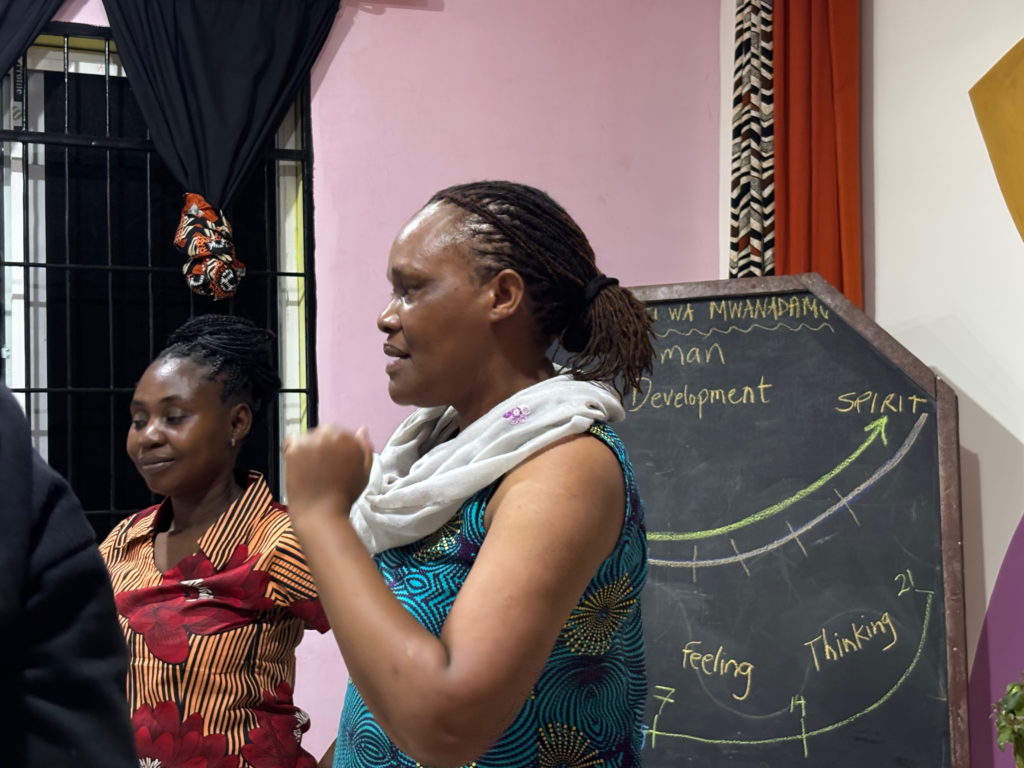
Janet Manoni, founder of Mwanangu Community in Vikindu, Tanzania and co-initiator of Camphill Academy Afrika spoke of the vision for this initiative in her opening address to faculty and students:
«We gather here with purpose: to learn, to connect, and to reimagine what inclusive social development looks like across Africa. We recognize the history we step into – how colonial education once separated us from our own knowledge systems, and how pre-colonial African education thrived through storytelling, apprenticeship, communal rituals, and wisdom shared by elders. […] In African cosmology, we do not learn alone. We learn with – with ancestors, with community, with land. This understanding of Ubumuntu – our shared humanity – is not abstract. It is alive in every gesture of care, every moment of listening, every child’s wonderfilled gaze.»
Ubumuntu, in Kinyarwanda, signifies the essence of what it means to be human, as seen through the lens of Ubuntu. It evokes kindness, generosity, greatness of heart, and an awareness of how our actions mediate creatively between the past and the future. The Swahili term Hekima speaks to a form of wisdom that flows from this awareness of what it means to be human and leads to ways of acting, which are true to that consciousness. Akaretsa is Setswana and means to embrace, involve, and include. It speaks to the social gesture of empowerment and inclusion that flows from the shared, wisdom-filled awareness of what it means to be human. These three terms form the leading thoughts of the Camphill Academy Afrika project.
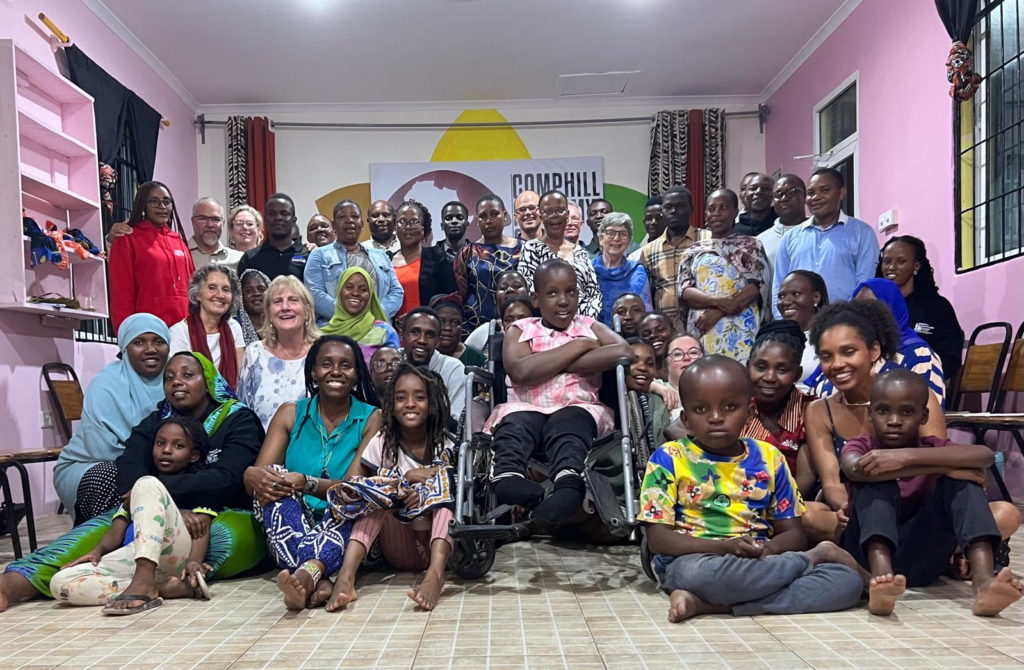
The pilot module in Vikindu brought together 31 participants from the three African partner organizations in the project: Mwanangu Development Tanzania (Vikindu and Mwanza campuses), Camphill Community Trust Botswana, and Ubumwe Community Center (Gisenyi and Mwogo campuses, Rwanda), and two from Camphill West Coast (South Africa). The faculty circle is drawn from the three African partner organizations, the Camphill Academy (US), the Center for Anthroposophy (US), and the Section for Inclusive Social Development at the Goetheanum. Guest faculty come from the African network in inclusive social development and Waldorf education.
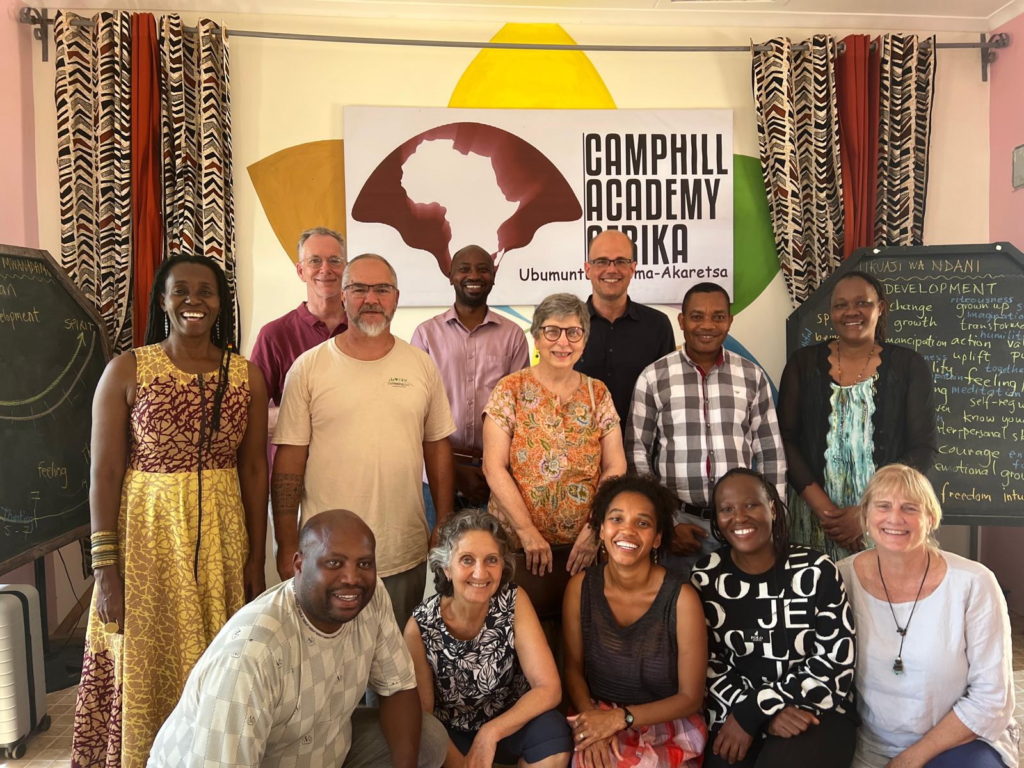
The full program is designed as a three-year process, combining in-person residencies, local peer-group study, and online teaching and mentoring. The curriculum includes shared core courses and specialized professional practice seminars. It is also conceived as a training-for-trainers process to build a closely connected group of future mentors and faculty in the region to take the work further. Currently, active fundraising is underway to raise the resources needed to implement the full three-year cycle.
Link: https://camphill.edu/afrika
Tip: You can find a video recording and PDF of Janet Manoni’s opening address on the Camphill Academy Afrika website.
Photos: Jan Göschel
Literature:
Mugumbate, J. R. (2020). ‹Samkange’s theory of Ubuntu and its contribution to a decolonised social work pedagogy.› In C. Morley, P. Ablett, C. Noble, S. Cowden (Eds.), Routledge handbook of critical pedagogies (pp. 141–160). Routledge.
Mugumbate, J., & Nyanguru, A. (2013). Exploring African philosophy: The value of Ubuntu in social work. African Journal of Social Work, 3(1), 82–100.