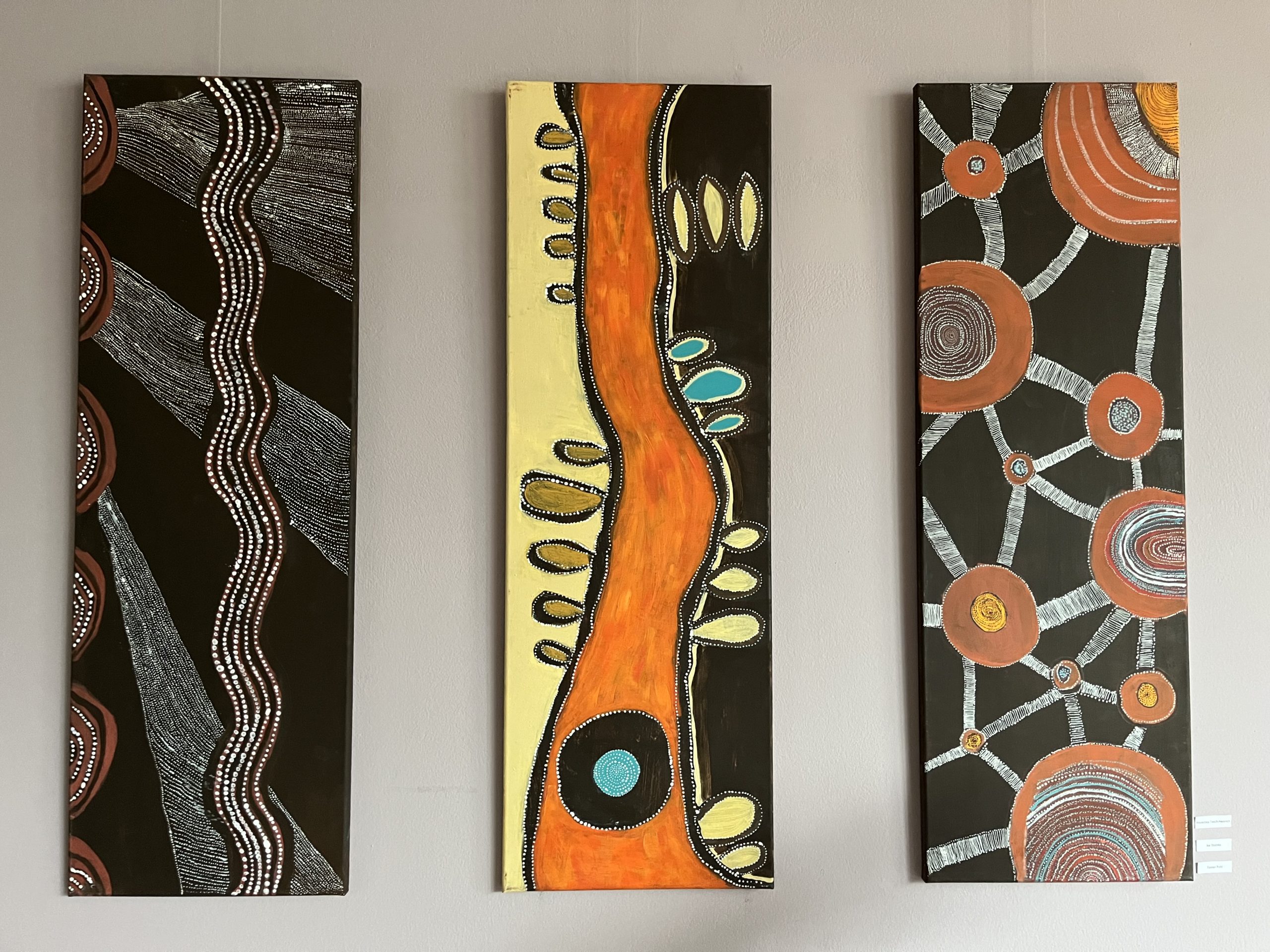
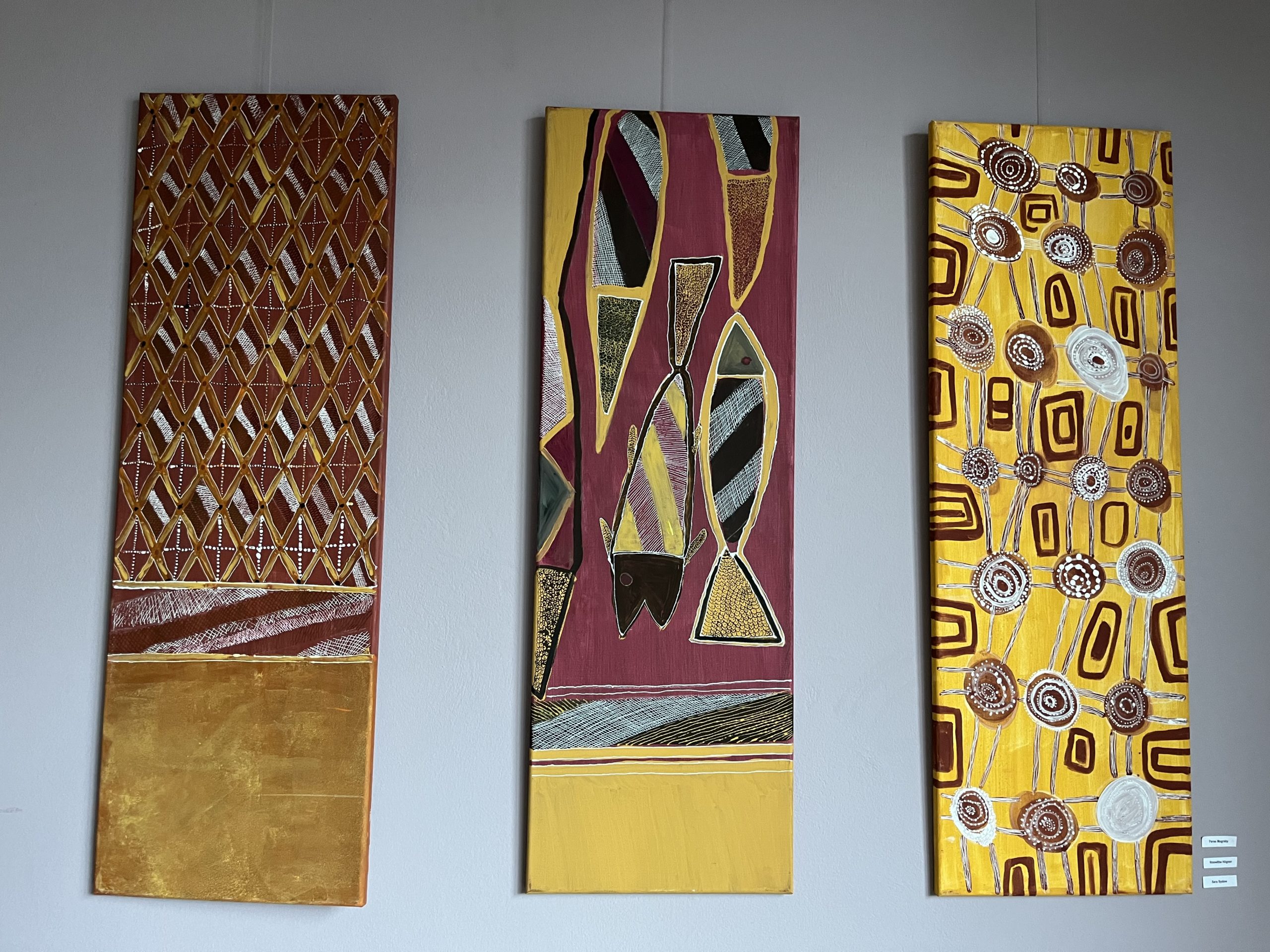
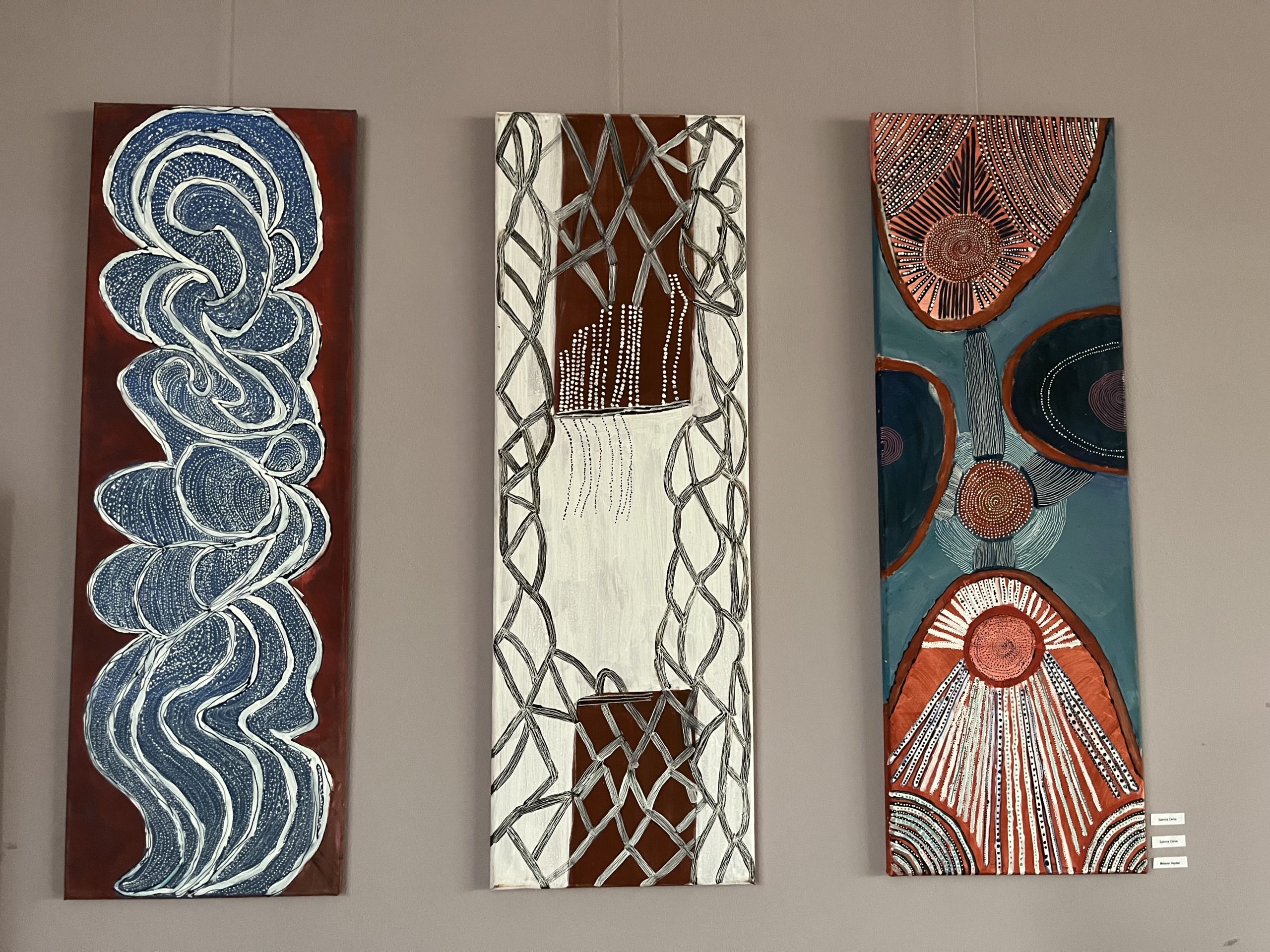
The exhibition at Galerie Me Collectors in 2017/18, with works of art from the National Gallery of Australia, surprised us in a unique way. Much of the work was inspired by a deep spirituality; they describe the Aboriginal Australians’ Dreamtime and express their deep connection with nature. Photography of these works is not allowed, as the images possess the power of the ancestral spirits.
The original indigenous population of what is now Australia owned no possessions or land on which they built houses. They were not bound to any one location – they lived in harmony with nature and moved from place to place in the outback, the desert and bush landscape of Australia, at one with the stars and seasons of the earth. They listened to the current of life, the sound of the earth; places with special energy centers, such as Ayers Rock, were sacred to them.
Various materials were used to record the lifeways of their people, their mythologies and traditional rites, and preserve them for their descendants. For thousands of years, traditional painting was applied mainly to impermanent surfaces, such as skin and sandy ground, or to rock faces. Many early Aboriginal works depict natural phenomena and the land. They were created using earth pigments on pieces of bark, strengthening the artists’ connection to their land.
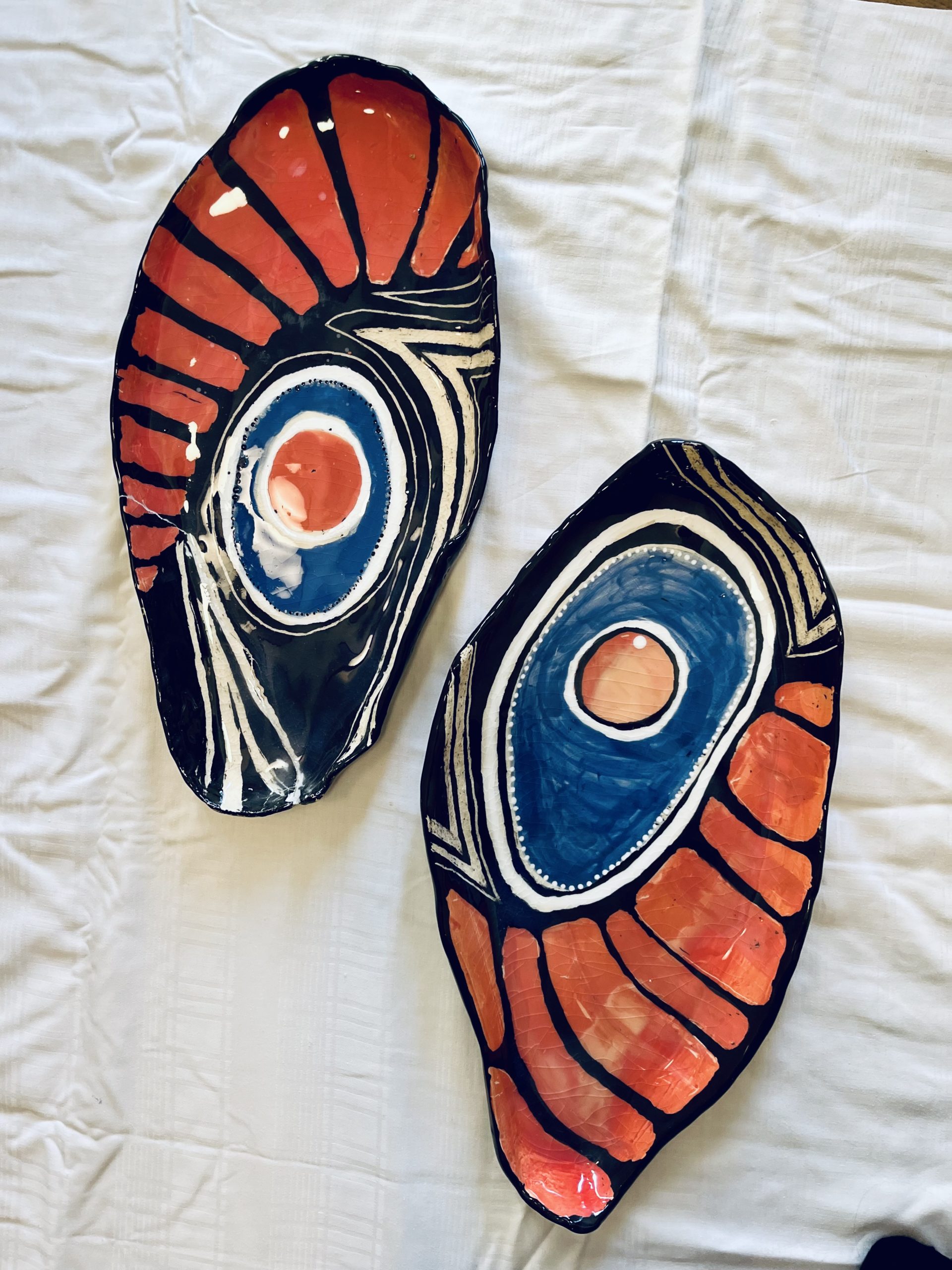
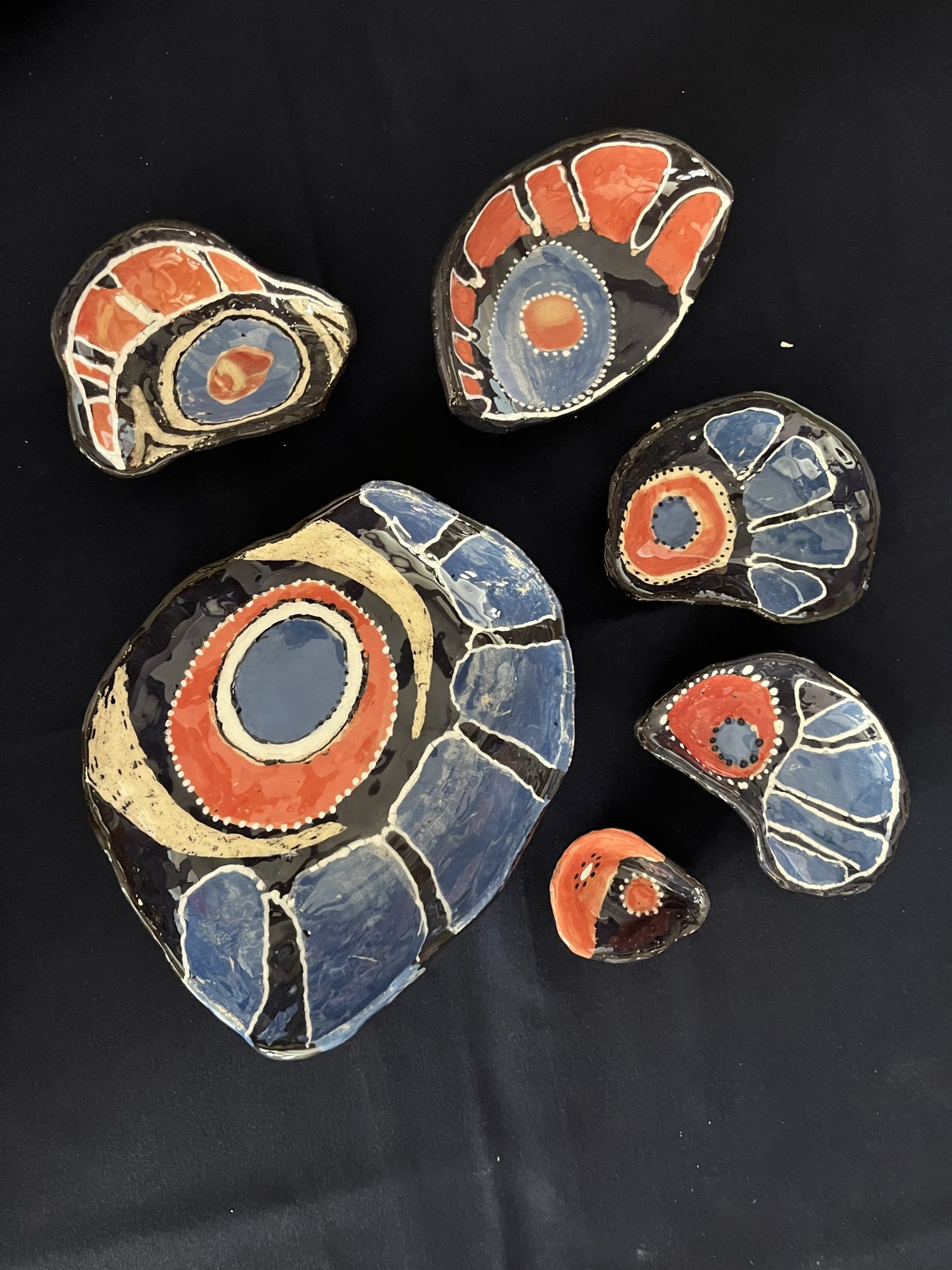
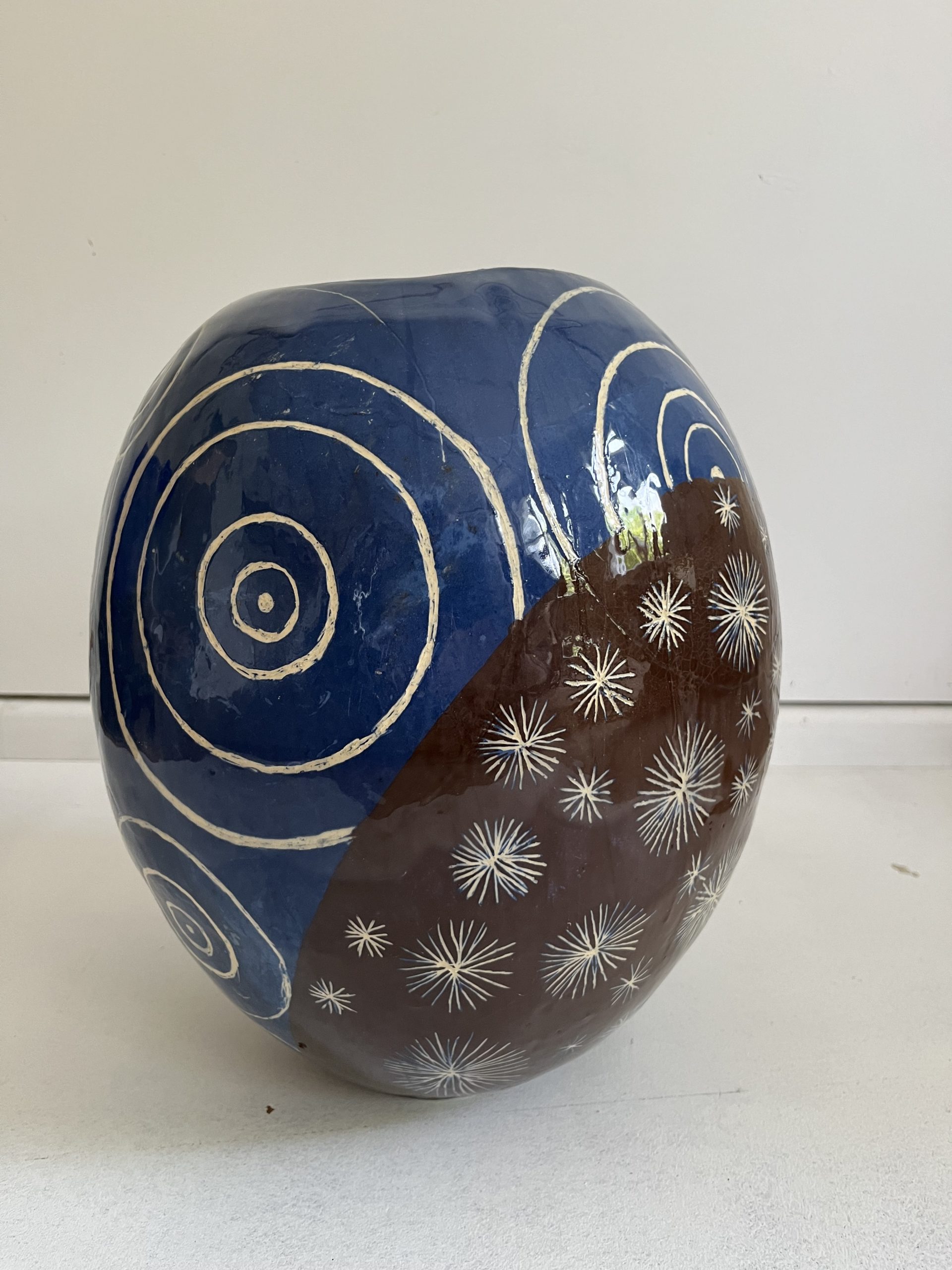
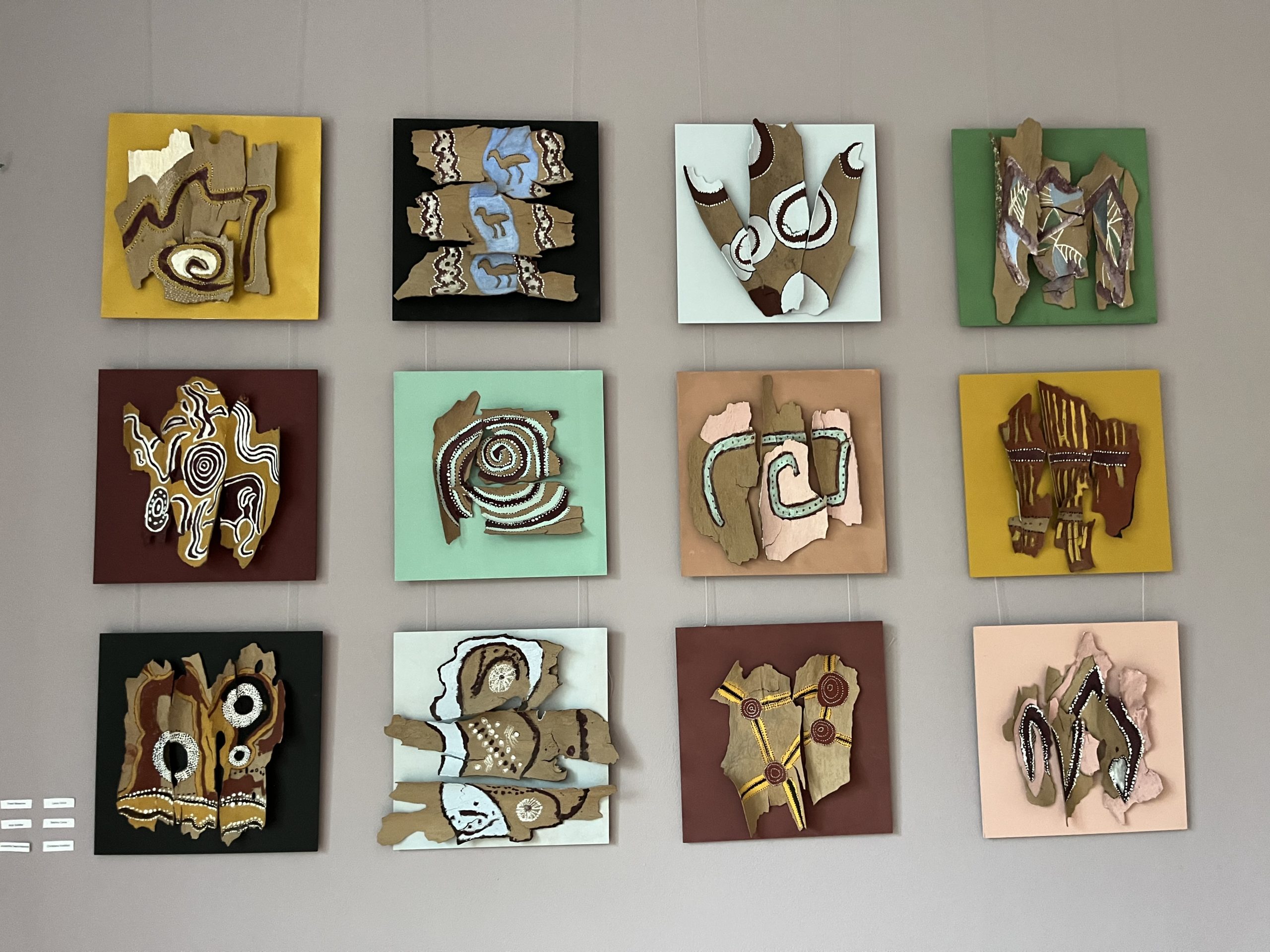
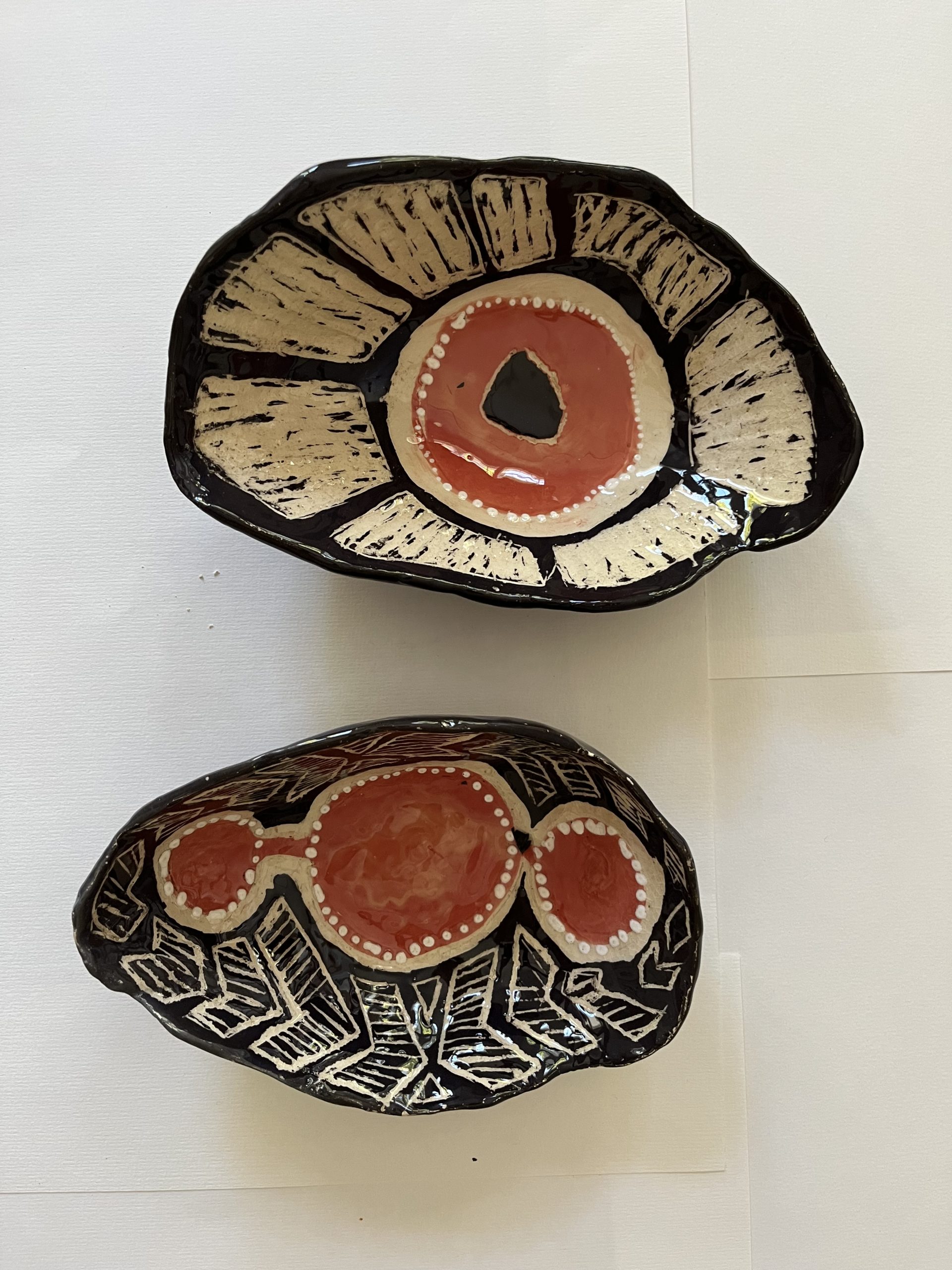
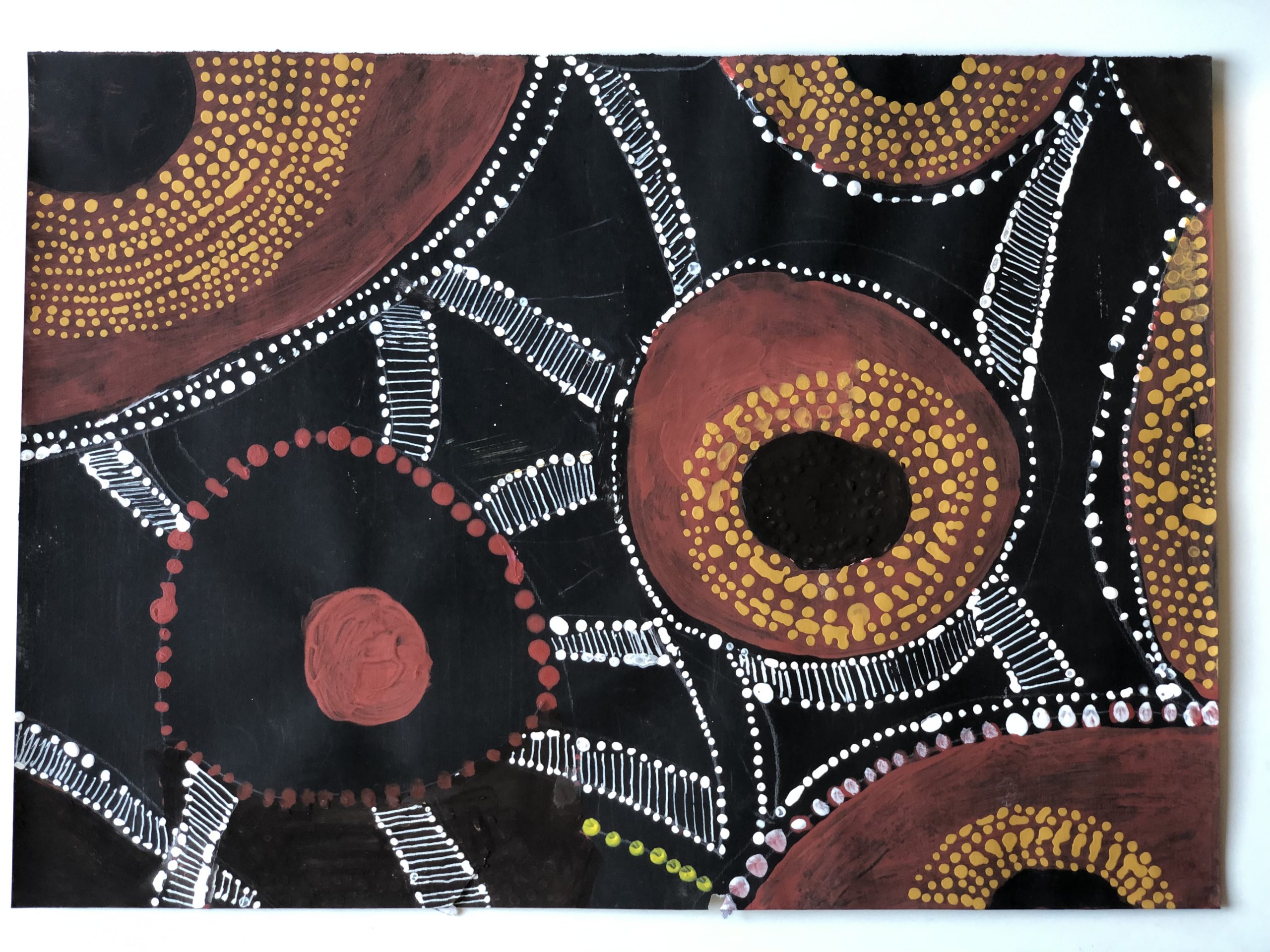
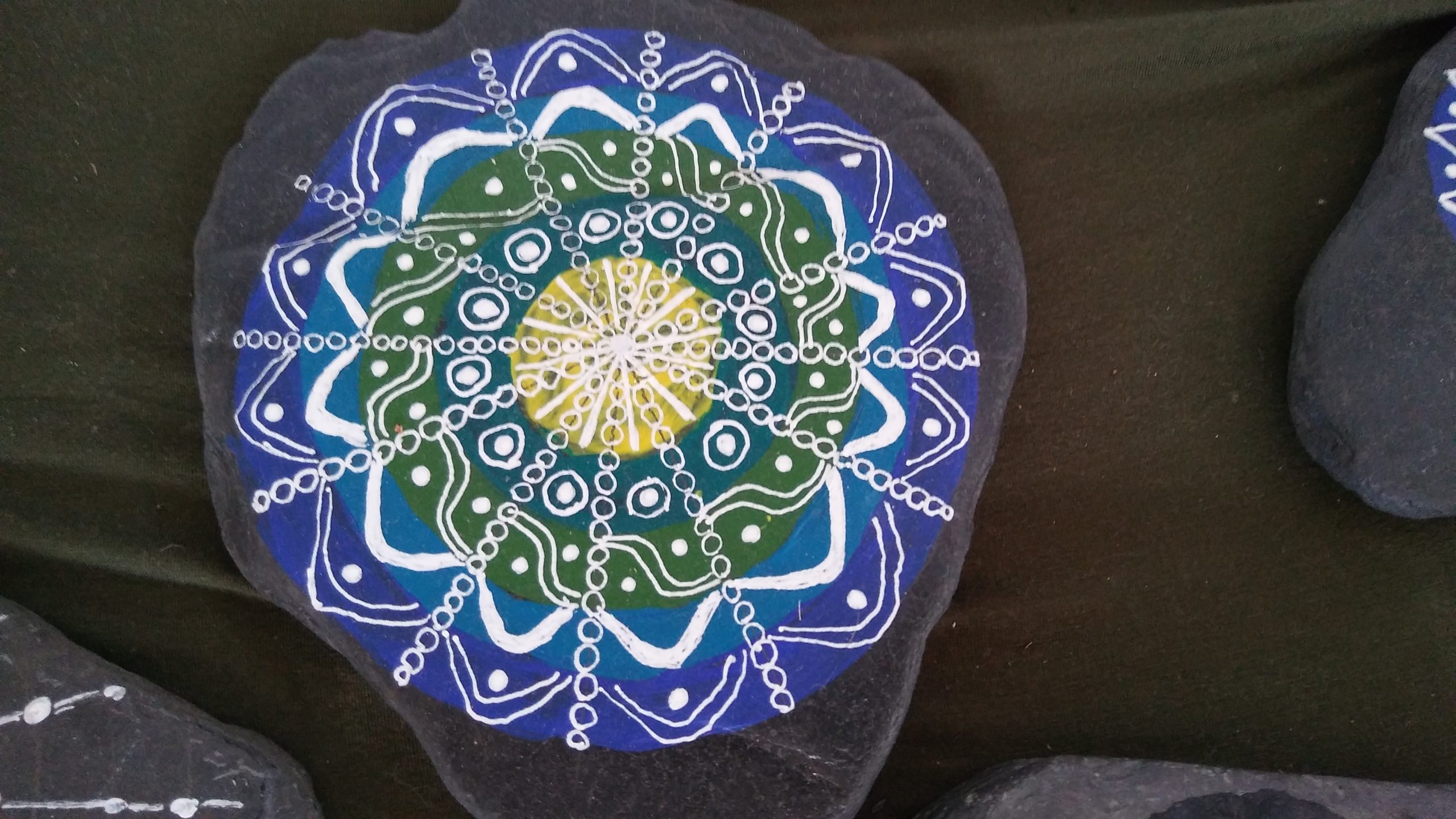
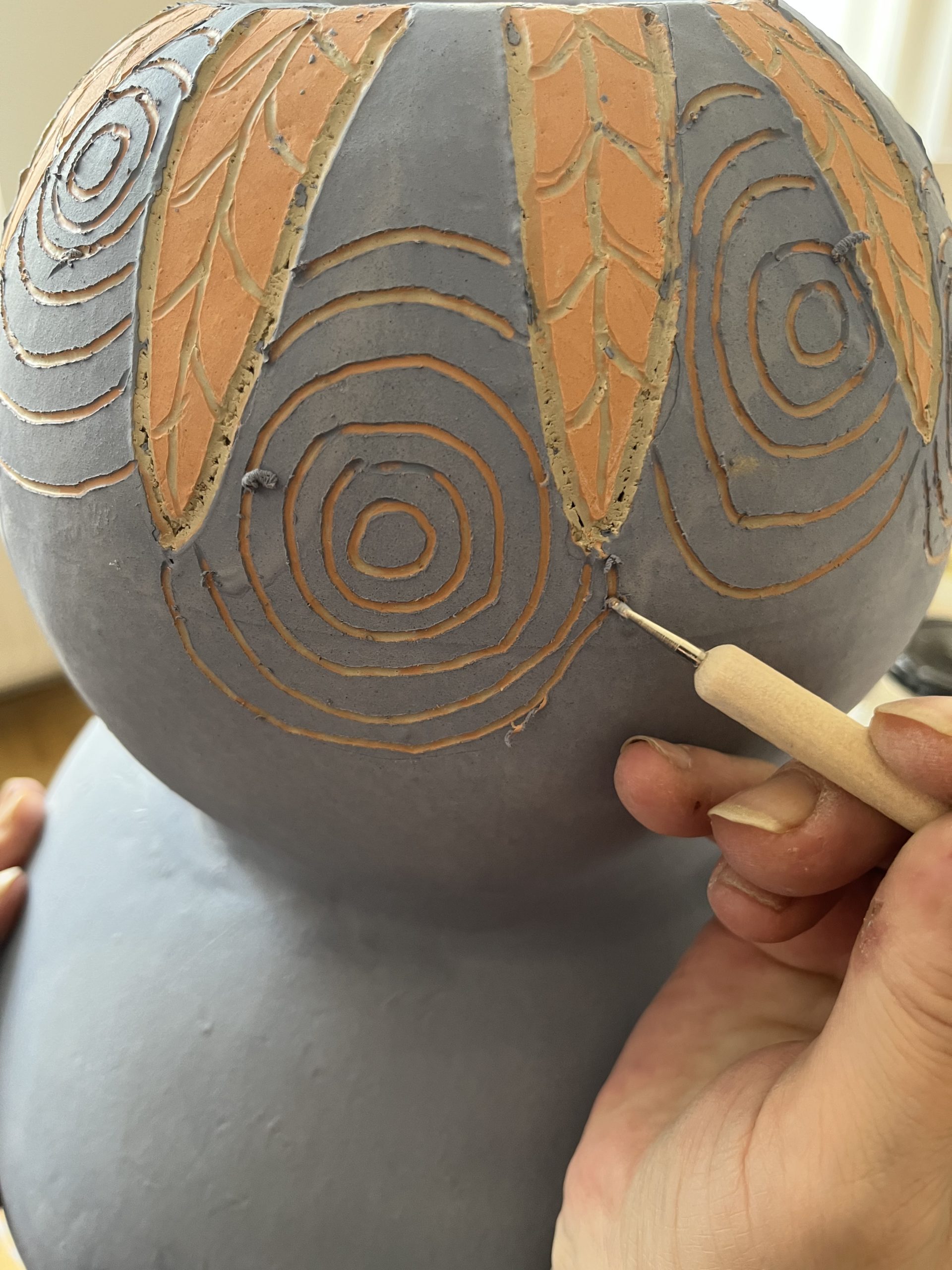
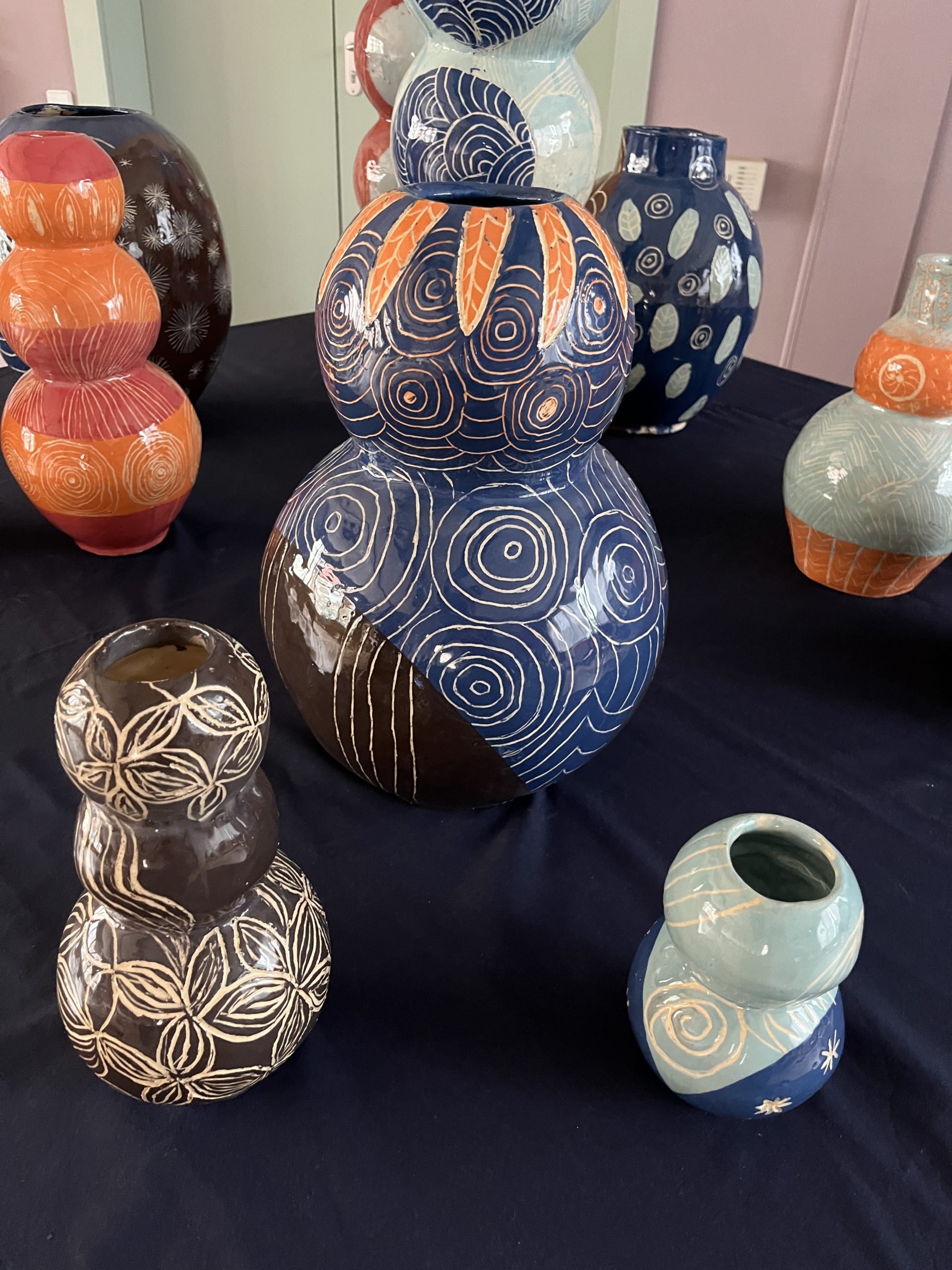
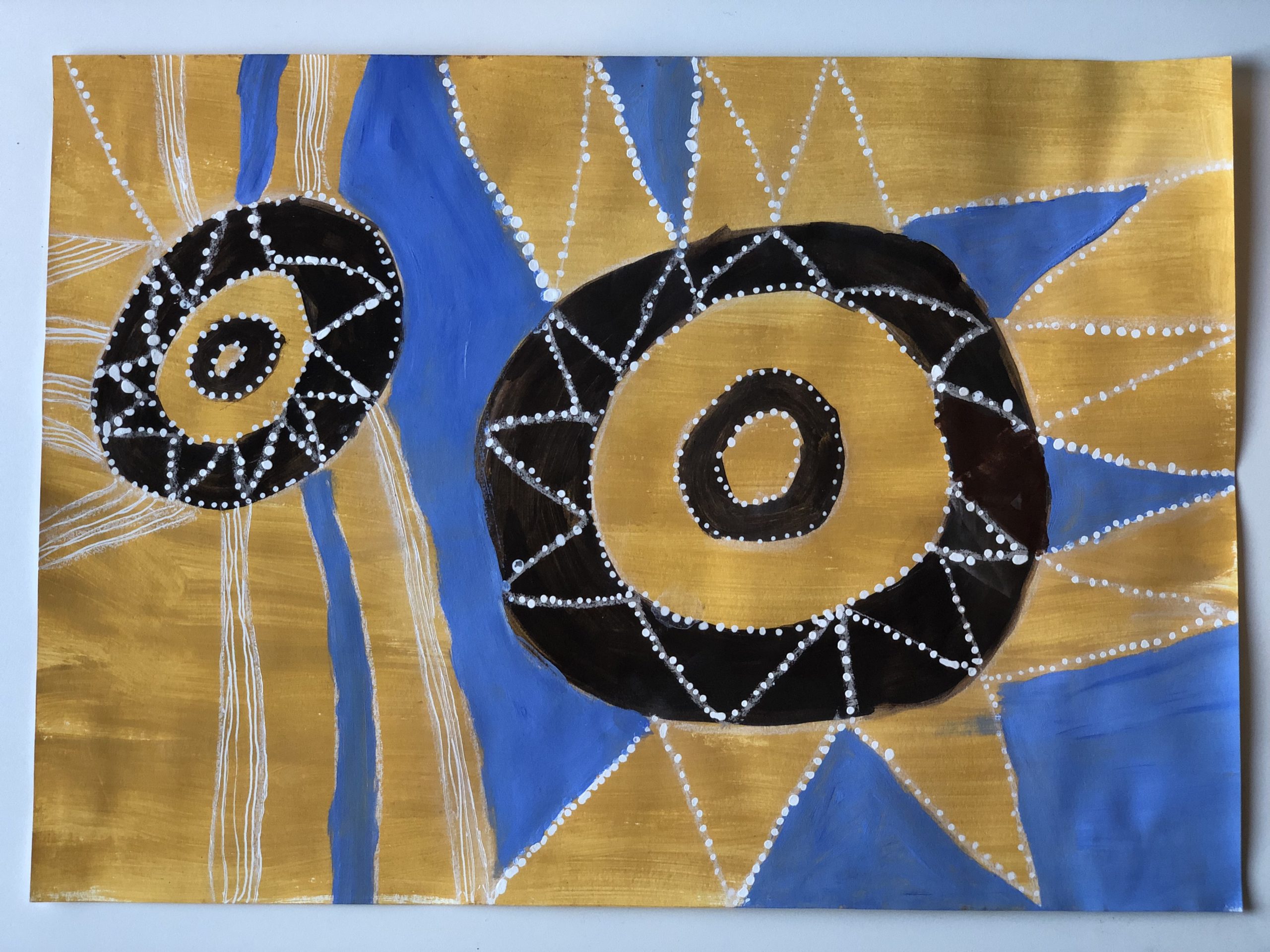
Using various materials and graphic elements, we tried to recreate the rhythmic flow of life in which people felt connected to the earth. We created works on stone, bark, paper and canvas, as well as ceramics, inspired in production and decoration by the Aboriginal artists. Over a longer period, we tested materials that seemed conducive to applying the dot technique. We composed images with dots and practiced using lines to create dynamic surfaces. It was important to us to work with natural materials. We collected stones and painted them and created sketches with earth pigments.
A visit to the ‹Songlines› exhibition at the Humboldt Forum (Berlin) in 2022 gave rise to the idea of constructing large vessels and decorating them with slip glaze and engravings.
Aboriginal Australian art is a collective art. Each tribe has its own wisdom, which is passed on through its images. 25 people took part in our project over a period of several years. They were people with disabilities who work at the Kaspar Hauser Foundation or attend the day center for people with mental illness. Individual and collective works were created.
Link: kh-stiftung.de
Photos: Kaspar-Hauser-Stiftung